Work

Optimizing Checkout:

Guest & Account Flows

Teams

Product, CX, Engineering

Tools

Figma, Baymard Institute, Eppo

Year

2025

Overview

Huckberry attracts 200,000+ daily site visitors across a growing digital platform. Although engagement was strong, repeated Looker funnel analysis highlighted a persistent registration-page drop-off among first-time users

This project challenged the assumption that required account creation drives long-term value by testing a more progressive approach: decoupling authentication from initial task completion and reframing account creation as a post-purchase step.

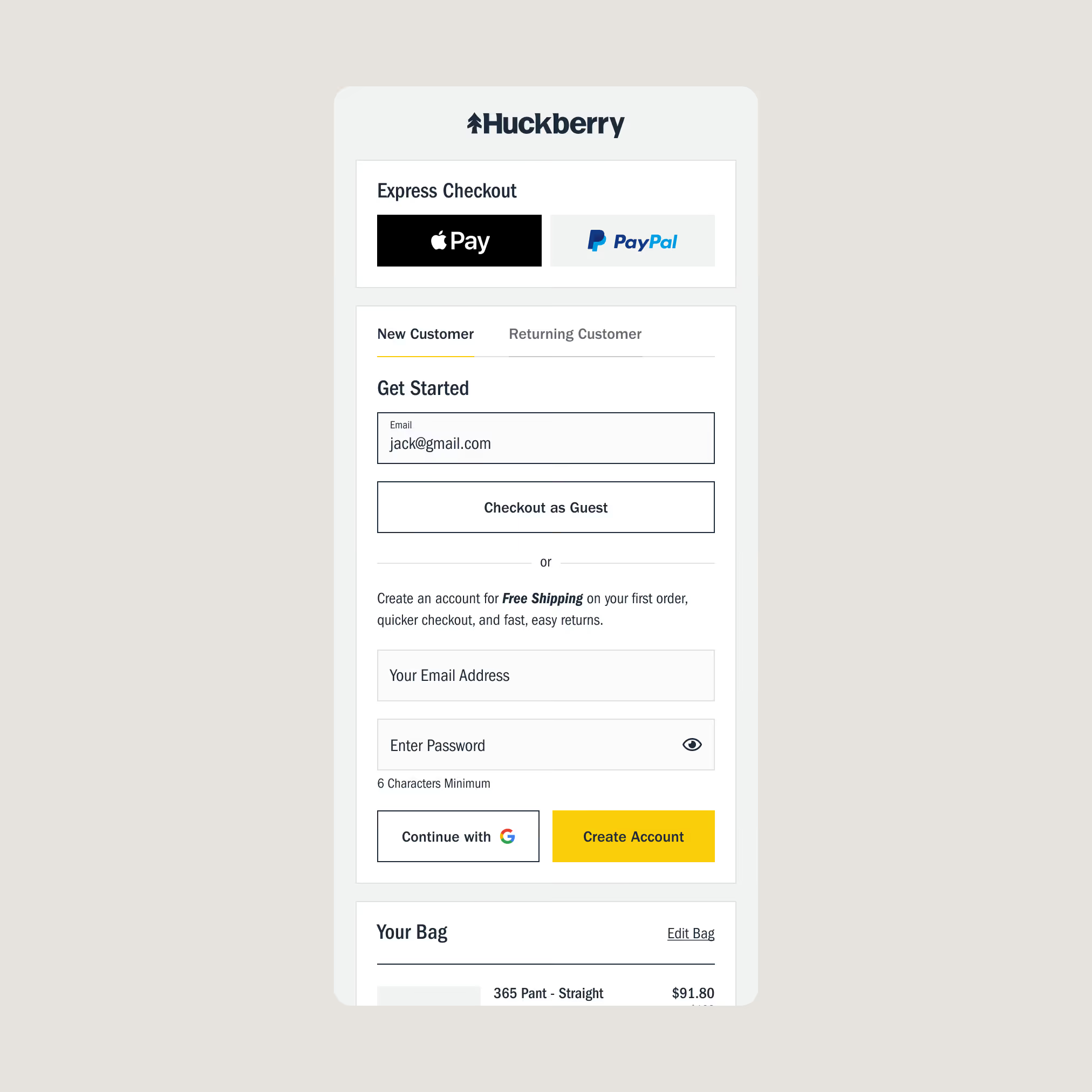
Final checkout experience with an email-first entry and optional account creation.

My Role

I led UX and UI design across Huckberry’s registration-to-checkout experience, owning flow logic, interaction design, and final visual execution. I also played a key role in advocating for and shaping the strategic shift toward testing a true guest checkout flow.

My responsibilities included:

  • Conducting competitive research across 15+ ecommerce brands
  • Synthesizing insights into a data-backed narrative to align product and leadership
  • Partnering with CX and Engineering to balance user needs with legacy system constraints
  • Defining guest, returning-user, and full account flows across multiple states, including error and recovery states
  • Redesigning checkout to remove mandatory account creation while preserving a clear path to registration and ensuring persistent data access for returning users

The Impact

+6.56% Orders Placed (Mobile)
$4.5M Incremental Annual Revenue
~50 additional orders per day
Reduced Login-Related CX Tickets

The Problem

Checkout analytics showed a consistent drop-off at the cart-to-checkout handoff, where users were required to create an account before proceeding.

This step introduced friction at a critical moment:

  • Password creation
  • Login errors
  • Account recovery confusion

While returning customers tolerated this friction, new customers dropped off disproportionately, signaling that the requirement was acting as a barrier to conversion rather than a driver of value.

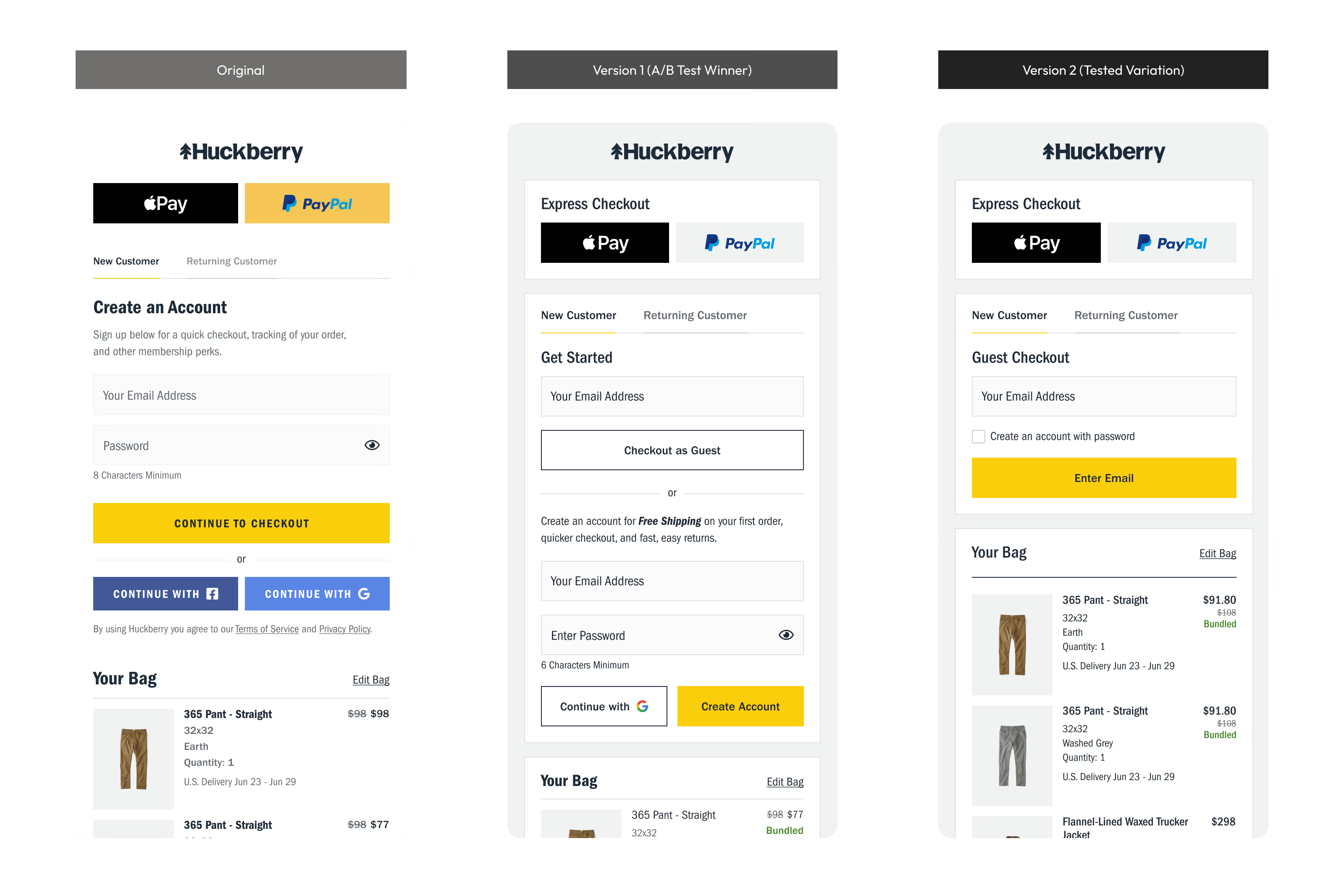
Original checkout required mandatory account creation, adding friction at a critical conversion point.

Core Challenges

  • Enable guest checkout while preserving a clear path to account creation
  • Work within legacy authentication and backend constraints
  • Update checkout UI to align with the evolving design system
  • Design complete error and recovery states and ensure persistent state management for users across sessions
  • Maintain accessibility and scalability for future iteration

Research & Alignment

Competitive & Industry Research

I reviewed checkout flows across 15+ ecommerce brands, including Nike, Patagonia, On, Lululemon, Salomon, and Calvin Klein, evaluating:

  • Guest checkout prominence
  • Required fields at entry
  • Timing and framing of account creation
  • Error handling and recovery patterns
Google sheets analysis example

This analysis was paired with Baymard Institute research to validate industry best practices and identify proven patterns.

Baymard checkout research example

Key Learnings

01.

Front-load the decision, not the friction

Users respond best to a simple email entry that moves them forward without commitment.

02.

Anticipate returning users silently

Smart detection reduces confusion without interrupting flow.

03.

Timing beats persuasion

Users are more willing to create accounts after purchase, not before it.

Internal Collaboration

I partnered closely with:

  • CX to identify common friction points and support trends
  • Engineering to understand authentication logic and system constraints

This collaboration ensured the solution balanced usability, feasibility, and long-term maintainability across multi-state workflows and system constraints.

Iteration & Learning

V1: Equal Access, Signup as Primary CTA

The first iteration surfaced both guest checkout and account creation, but still visually emphasized signup to align with existing retention goals.

Early testing showed measurable improvements in cart-to-checkout progression, indicating that guest checkout reduced friction for users who simply wanted to complete their purchase.

V2: True Guest Checkout

Seeing positive results from the split design, I advocated for a stronger shift:

  • Guest checkout became the default
  • Email entry was the only required first step
  • Account creation was repositioned as optional and post-purchase

This marked a turning point in both performance and internal alignment, giving leadership confidence to decouple conversion from early registration. This iteration also addressed multi-view states including guests, returning users, and full account holders.

Key Tradeoffs

Removing mandatory account creation introduced a risk: fewer registered users at checkout entry. We mitigated this by:

  • Offering account creation post-purchase, when users were more receptive
  • Preserving downstream benefits like order history, returns, and loyalty
  • Ensuring returning users could still sign in seamlessly

Final Experience

1. Email-First Checkout Entry

A single, low-friction entry point that allows users to move forward without forced commitment.

2. Smart Existing-User Detection

Returning users are recognized and prompted to sign in — without blocking progress.

3. Error Handling & Recovery

Clear, contextual messaging enables recovery without losing progress or trust while maintaining state consistency.

4. Post-Purchase Account Creation

Account creation is offered after checkout, when users are more motivated and less interrupted.

5. Order Lookup for Guests

Non-account users can still access order details easily, reducing CX burden.

6. Full Account Creation Flow

For users who opt in early, the experience remains simple, consistent, and accessible across devices and user states.

Results & Reflection

Outcomes

  • +6.56% Orders Placed (Mobile)
  • $4.5M in incremental annual revenue
  • ~50 additional orders per day
  • Reduced login-related CX tickets

Reflection

This project reinforced a core belief in my product approach: The most impactful design work removes friction rather than adds features.

By respecting user momentum and challenging long-held assumptions, we improved conversion, reduced support burden, and created a more human checkout experience — without compromising long-term business goals.

Post-launch, we continued refining the experience based on performance data and CX feedback, treating checkout as a living system rather than a one-time redesign.

Our 6-week Guest Checkout test boosted new-customer conversion by 3.72% and drove an estimated $4.5M in additional annual revenue. Thanks to Chris Jordan for incredible research and new designs simplifying the experience for our customers.

Richard Greiner
Huckberry Co-Founder

Next Case Studies

Let’s build thoughtful products together.